
How to proceed correctly if you recognise a trace of oil
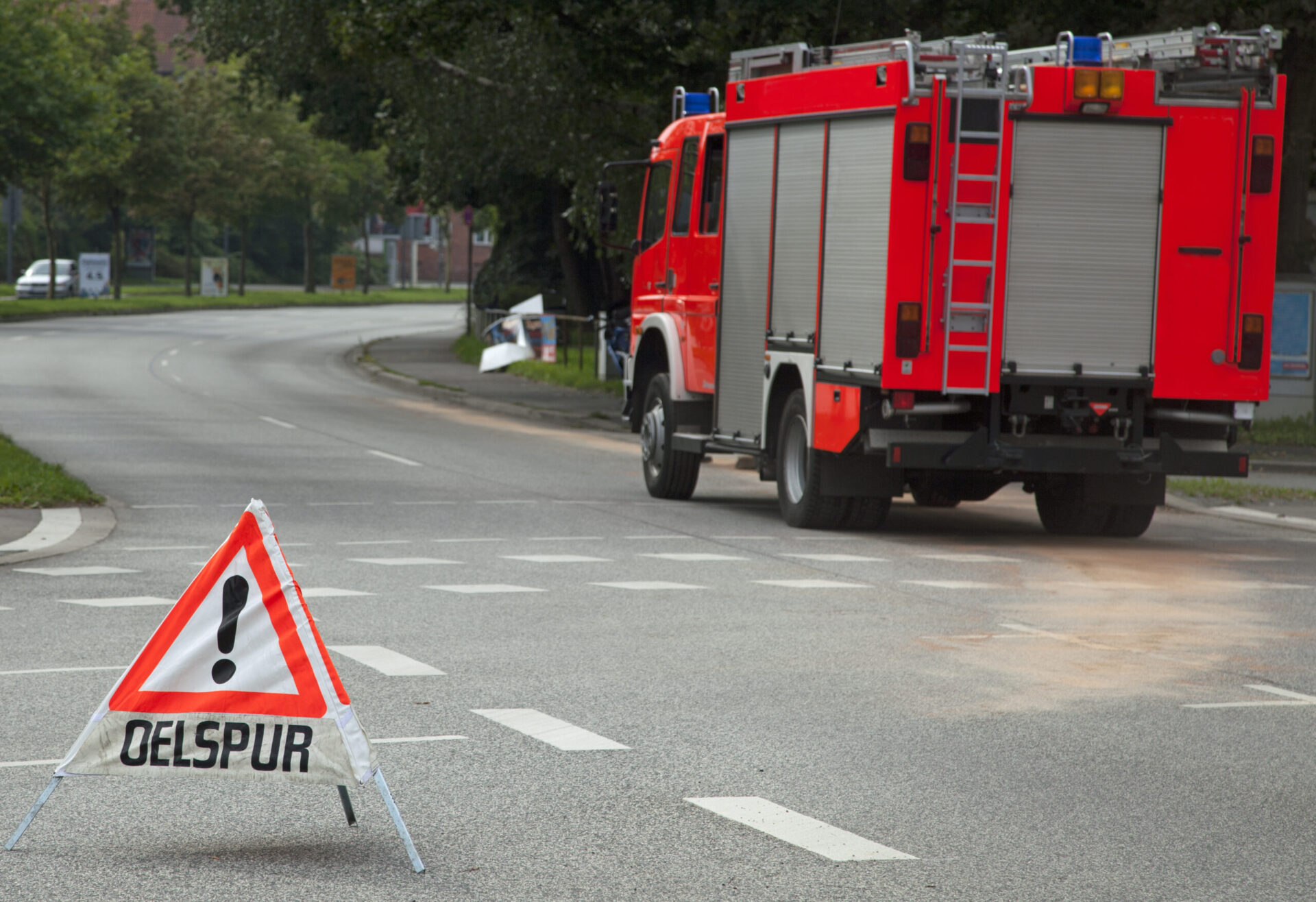
What to do if there is oil on the road?
In the event of oil on road surfaces, rapid action is required to ensure safety and prevent environmental damage.
This is how you proceed:
Firstly, you should inform the relevant authorities, for example the police or the public order office. They can initiate traffic safety measures and arrange for the oil to be cleaned up. Specialised companies use special cleaning vehicles to safely bind and remove the oil. It is important for private individuals to avoid contact with the oil spill and not to attempt to clean it up themselves, as this can lead to further contamination.

How do I recognise traces of oil correctly?
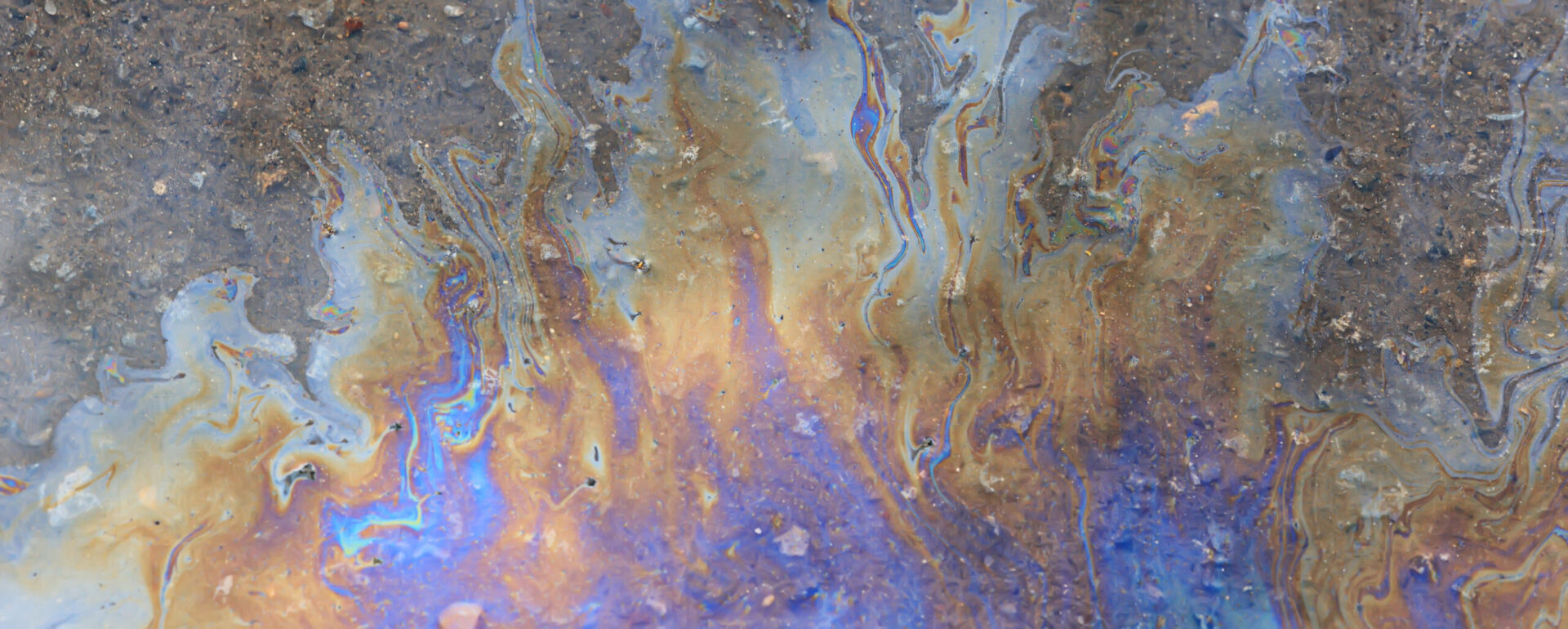
You can usually recognise oil marks by dark, shiny spots or rainbow-like streaks on the floor. They can be visible on various surfaces such as tarmac, concrete or even in water.
Risk for road users:
Traces of oil are particularly slippery and dangerous in wet conditions. Also pay attention to the typical odour of engine oil or diesel. If you notice oil on road surfaces, it is important to keep your distance and make the area safe to avoid accidents and to inform the relevant authorities quickly.
Liquid oil binding agents to restore road safety
Who is liable for damage caused by oil spillages?
Liability for damage caused by oil spills generally lies with the person or company whose vehicle leaked the oil or fuel.
That applies:
In accordance with the polluter pays principle, they must pay for the cleaning costs and any Environmental damage arise. In practice, however, it is often difficult to determine who is responsible. For this reason, local authorities or road authorities initially take over the cleaning in order to avert danger. The costs can then be reclaimed from the polluter if the polluter can be identified.
How do I report an oil spill?
To report an oil spill, contact the local police or the public order office in your city immediately. Alternatively, you can call the fire brigade on the emergency number 112, especially if the oil on the road poses an immediate danger.
Important information for the registration office:
Enter the exact location and size to enable a quick and effective response. Your proactive reporting contributes to road safety and helps to prevent environmental damage. Authorities and specialised cleaning companies take care of the professional removal.
The most important facts summarised
Due to their characteristics, oil spills pose a risk to various areas and should be reported as soon as possible
Danger to road safety
The significant reduction in the skid resistance of the road surface creates a hazard for road users. Even a small trace of oil can lead to loss of control of the vehicle during braking and steering manoeuvres. In the worst case scenario, this can lead to an accident with material damage or even personal injury.
Danger to the environment
Traces of oil also pose a threat to the environment. The environmentally harmful substances in fuels such as petrol or diesel, but also in engine oil or hydraulic oil, endanger the ecology in the affected area. Contamination can have fatal effects on living organisms and plants.
What to do in the event of an oil spill
Due to the complex risks involved, a as quickly as possible Removing an oil spill is a top priority. Therefore, if you recognise an oil spill, you should report it immediately to the report to the responsible authority (fire brigade or police). The oil spill is usually removed by municipal services (building yard, road maintenance department, fire brigade) or by specialised companies (environmental services, street cleaning companies).
Frequently asked questions
What is an oil slick and how does it form?
An oil spill occurs when liquid oil products escape from vehicles or machines onto roads or other surfaces due to leaks.
Causes:
This can be caused by defective engines, gearboxes or hydraulic systems. Traces of oil are not only harmful to the environment, but also pose a risk to road safety as they increase the risk of skidding.
What measures should be taken if an oil spill is discovered?
As soon as an oil spill is discovered, the affected area should be secured immediately to prevent accidents.
This is how you proceed:
It is then important to inform the relevant authorities or specialised cleaning companies that have the necessary equipment and expertise to carry out the cleaning. Removing the oil slick available.
How do you use liquid oil binding agents safely?
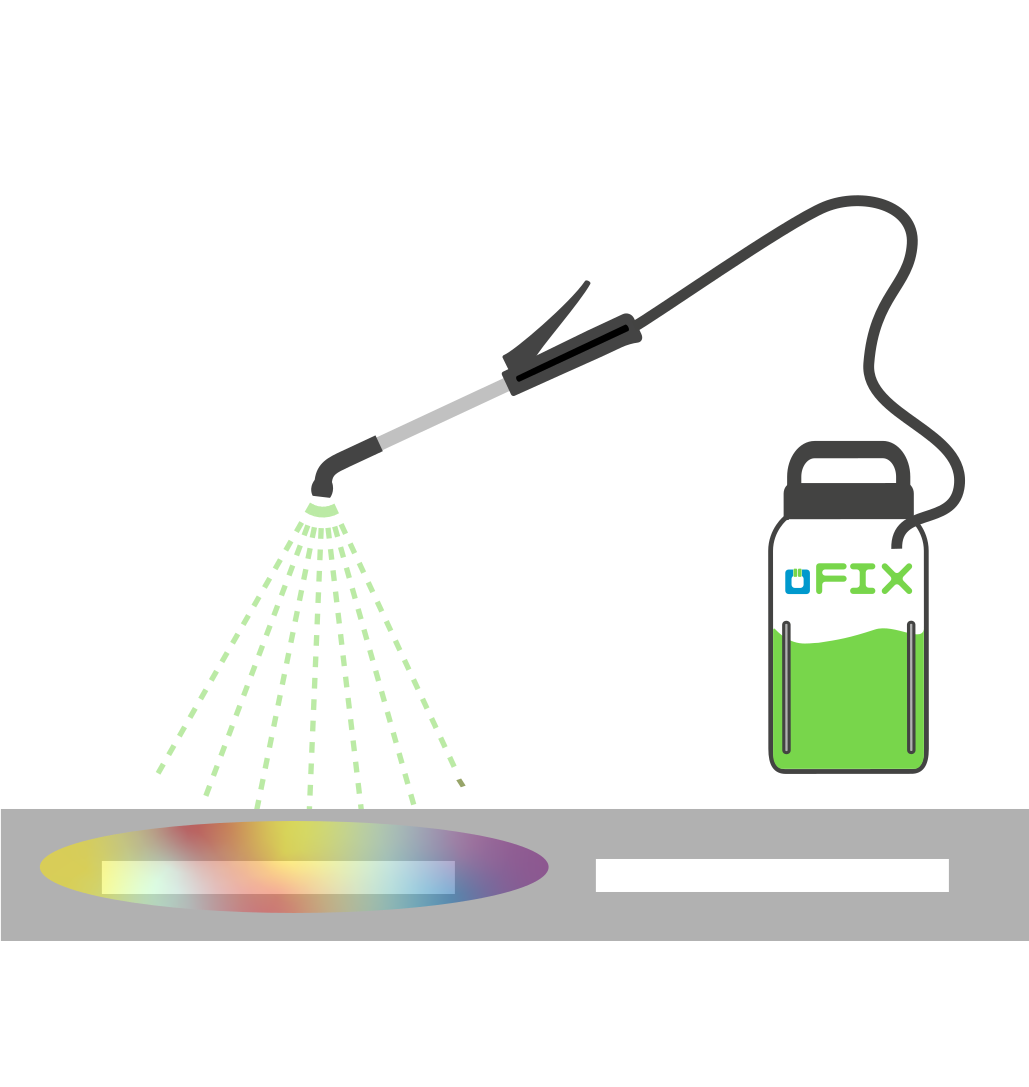
When using Liquid oil binding agents it is important to read the manufacturer's safety data sheets and instructions carefully. As a rule, the binding agent is applied directly to the oil spill and must be left to act for a certain period of time in order to completely absorb the oil. After the exposure time, the bound oil can be safely disposed of. It is essential to wear personal protective equipment during application to avoid skin contact and inhalation of vapours.
Why are liquid oil binding agents effective in removing oil spills?
Liquid oil binding agents are particularly effective for removing oil from traffic areas, as they are quick and easy to use. Penetrate deep into the surface to absorb the oil. These binders are specially formulated to ensure fast and efficient absorption of oil without leaving a harmful residue. They are ideal for a variety of surfaces, including asphalt, concrete and natural stone.
What are the advantages of liquid oil binding agents over other methods?
Liquid oil absorbents offer several advantages over traditional methods such as granulates or mechanical cleaning. Not only are they faster and more efficient at absorbing oil, but they also minimise the risk of environmental damage as they are biodegradable. They also require less storage space and are easier to handle, making them a practical solution for the quick and effective removal of oil spillages.
Our products
Minimum order quantity: 20 x 10-litre canisters. Other packaging available on request.
10-litre canisters, 600-litre IBCs and 1,000-litre IBCs. Other containers available upon request.
10-litre canisters, 600-litre IBCs and 1,000-litre IBCs. Other containers available upon request.
10-litre container. Further containers available on request.
10-litre canisters, 600-litre IBCs and 1,000-litre IBCs. Other containers available upon request.
10-litre canisters, 600-litre IBCs and 1,000-litre IBCs. Other containers available upon request.
10-litre canisters, 600-litre IBCs and 1,000-litre IBCs. Other containers available upon request.