
Our liquid oil binders FMO Strasse and FMO Gewässer meet the highest environmental and water protection requirements – for safe use on traffic areas and waterways.
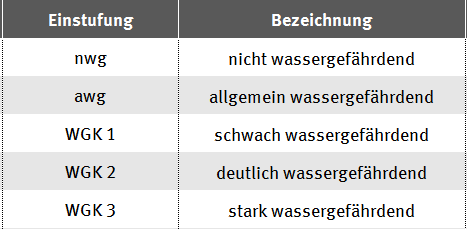
What does „not hazardous to water" mean according to the AwSV?
In Germany, the Ordinance on Installations for Handling Substances Hazardous to Water (AwSV) regulates the protection of groundwater and surface water. Each substance and mixture is classified into one of three water hazard classes (WGK 1 to 3) or designated as „non-hazardous to water“ according to a fixed assessment system.
FMO Road and FMO Waters are considered Not hazardous to water rated. This is the best possible rating under German water law and means: The product poses no danger to water bodies – neither to groundwater, lakes, rivers, nor the sea.
For practical application, this offers crucial advantages: While cleaning agents with water hazard classes 1, 2, or 3 always run the risk of entering waterways via road drains, ditches, or the soil when used on traffic areas, this risk is eliminated with a non-water-polluting product. This makes FMO Strasse the safe choice for fire brigades, municipal depots, and road maintenance services that want to use an environmentally compatible product for manual oil spill cleanup. FMO Gewässer can even be used directly on water surfaces to remove oil films.
Welche Anforderungen stellt die CLP-Verordnung, und warum ist FMO kennzeichnungsfrei?
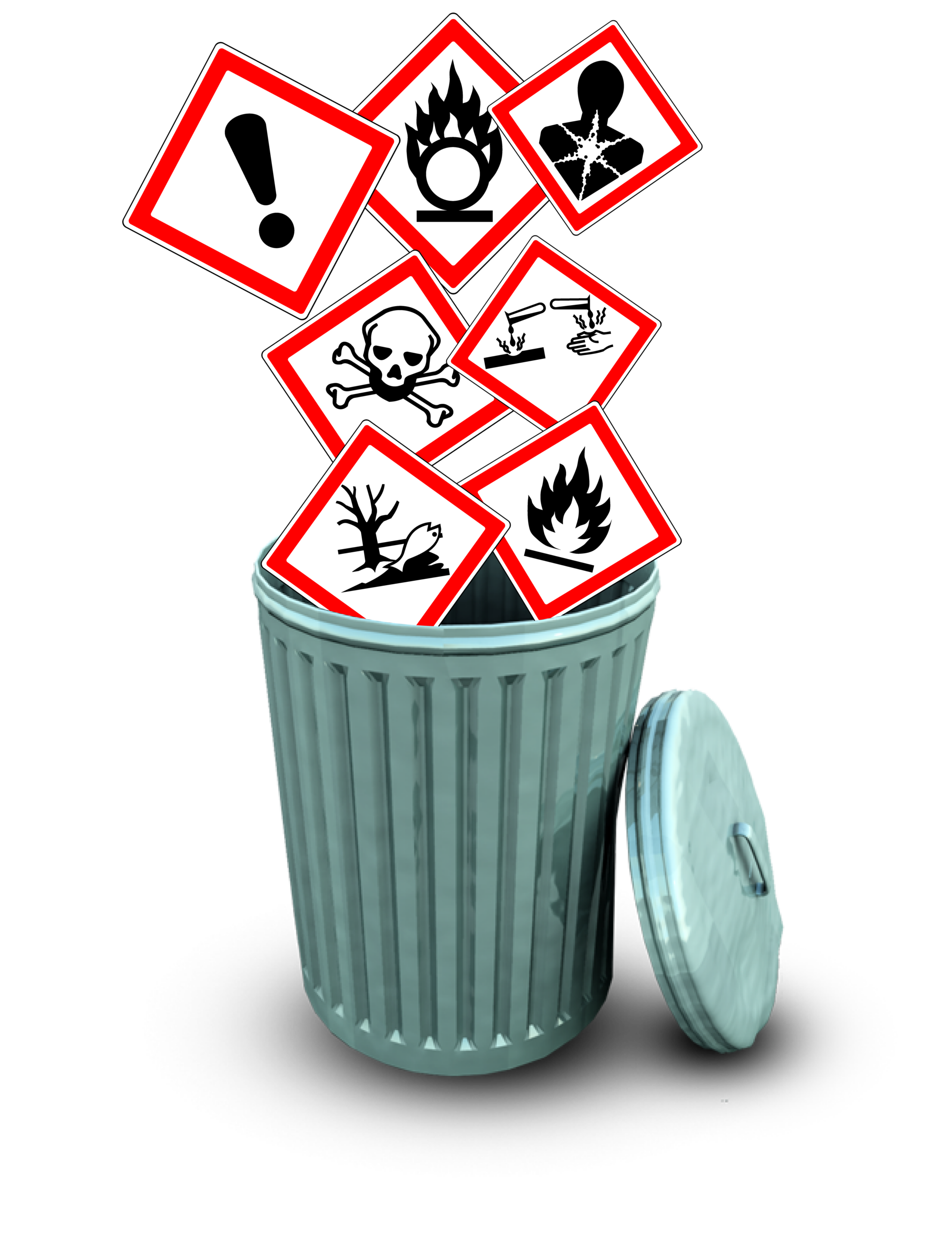
The CLP Regulation (EC) No 1272/2008 is the central European regulatory framework for the classification and labelling of chemical substances and mixtures. It determines whether a product is considered a hazardous substance and which hazard pictograms, signal words and safety advice must appear on the label.
For FMO land and FMO water, according to the CLP Regulation No classification as a hazardous substance required. This means specifically: there are no GHS hazard pictograms, no signal word „Danger“ or „Warning“ and no H-statements (hazard statements) on the label. The product is Not subject to labelling requirements.
The only information on the label, in accordance with the Detergents Regulation, is that the product contains Cocamidopropyl betaine (0.1–1 %), which can cause allergic skin reactions in already sensitised individuals. This transparency is legally required and highlights our responsible approach to product information.
For the user, the classification as non-hazardous means: No hazardous material storage required, no special transport regulations, simplified handling and instruction – and an increase in safety for the on-site emergency responders.
Liquid oil binding agents to restore road safety
Was Non-HME bedeutet und warum das relevant ist: **Non-HME** steht für **"Non-Heat and Mass Exchanger"** (Nicht-Wärme- und Massenübertrager). **Relevanz:** Im Kontext von Medizinprodukten, insbesondere bei **Atemtherapiegeräten**, ist die Unterscheidung zwischen HME und Non-HME wichtig. HME-Filter werden verwendet, um die Atemluft für den Patienten zu erwärmen und zu befeuchten, wenn dieser über einen Tubus oder eine Trachealkanüle atmet. **Non-HME bedeutet also, dass ein bestimmtes Gerät oder Zubehörteil *keine* Funktion zum Erwärmen und Befeuchten der Atemluft hat.** Dies kann in verschiedenen Situationen relevant sein: * **Notwendigkeit einer aktiven Befeuchtung:** Wenn der Patient eine sehr geringe Luftfeuchtigkeit nicht toleriert oder eine spezielle therapeutische Maßnahme erfordert, muss möglicherweise ein aktiver Befeuchter statt eines HME verwendet werden. * **Geringerer Bedarf an Befeuchtung:** Bei kurzfristiger Anwendung oder wenn die Luftfeuchtigkeit in der Umgebungsumgebung bereits hoch ist, ist ein HME möglicherweise nicht zwingend erforderlich. * **Kosten und Komplexität:** Non-HME-Lösungen sind oft einfacher und kostengünstiger als HME-Filter, wenn die Befeuchtungsfunktion nicht benötigt wird. * **Anwendungsbereiche:** In einigen chirurgischen Verfahren oder bei bestimmten Beatmungsmodi wird bewusst auf eine Befeuchtung verzichtet, und hier kommen Non-HME-Systeme zum Einsatz. Zusammenfassend lässt sich sagen, dass "Non-HME" darauf hinweist, dass eine Vorrichtung zur Ergänzung der natürlichen Atemwegsfunktionen in Bezug auf Erwärmung und Befeuchtung der Atemluft fehlt.
In international dangerous goods law – particularly in the IMDG Code (International Maritime Dangerous Goods Code) and the MARPOL Convention for the Prevention of Pollution from Ships – substances are assessed for their harmfulness to the marine environment. Substances that exceed certain thresholds for aquatic toxicity are labelled HME (Harmful to the Marine Environment), also „harmful to the marine environment“.
FMO roads and FMO waters meet the criteria for classification as Non-HME – so they are not harmful to the marine environment. This is confirmed by the following properties:
- The fish toxicity, with an LC₅₀ value of over 100 mg/l, is far below the threshold at which a hazard to aquatic organisms would be assumed.
- The daphnia toxicity (water fleas as indicator organisms) also shows an EC₅₀ value of over 100 mg/l.
- The surfactants contained are 100 % biodegradable (complete degradation within 28 days).
- The product is not bioaccumulative – meaning it does not build up in organisms or the food chain.
The non-HME property is of central importance, particularly for the use of FMOs on water surfaces: the cleaning agent used to remove oil films must not pose a hazard to the aquatic ecosystem itself.

How does FMO protect soil and the earth's surface?
A standalone, internationally standardised classification system for the soil compatibility of detergents – comparable to the HME system for the marine environment – does not yet exist. In Germany, protection of the earth's surface is instead ensured through several regulatory frameworks, particularly the Federal Soil Protection Act (BBodSchG) and the associated Federal Soil Protection and Contaminated Sites Ordinance (BBodSchV).
FMO street and FMO waterways fulfil the requirements of these regulations in multiple ways:
No detrimental soil alteration: The product does not contain any substances that are classified as persistent, bioaccumulative or toxic (PBT) or as very persistent and very bioaccumulative (vPvB). It does not cause any harmful soil changes within the meaning of the BBodSchG.
Proven biodegradation in soil: Independent laboratory tests have shown that our FMO products significantly accelerate the natural breakdown of hydrocarbons in soil. In trials with contaminated organic soil (Münster, 1998), a reduction in hydrocarbon concentration of 80 to 95 % was measured within 35 days – with a simultaneous significant increase in bacterial growth. The included biosurfactants and nutrients therefore activate the natural soil microbiology and promote the soil's self-purification process.
Groundwater protection: As the product is classified as not hazardous to water and does not contain persistent substances, there is no risk to groundwater even if it seeps into the soil. This is particularly relevant when used on traffic areas without a connection to the sewage system or in rural areas.
What further environmental and safety requirements do FMO Strasse and FMO Gewässer meet?

In addition to the core requirements for water, marine and soil protection, our products fulfil a range of further regulatory and safety-related requirements:
EU Detergents Regulation (EC) No 648/2004: FMO Street and FMO Waters fully comply with the requirements of the European Detergents Regulation. All surfactants contained are biodegradable. Composition according to the regulation: anionic surfactants < 5 %, soap < 5 %, phosphates < 5 %.
Washing and Cleaning Agents Act (WRMG) The product meets the requirements of the German detergent and cleaning agent act and is therefore approved for professional use in the cleaning sector.
VOC content: 0 % in accordance with 31. BImSchV – the product causes no emissions of volatile organic compounds. There is no air pollution at the point of use.
No dangerous goods: FMO roads and FMO waters are not subject to dangerous goods regulations – neither for road transport (ADR), rail transport (RID), sea transport (IMDG), nor air transport (IATA). Transport and storage are uncomplicated and possible without special requirements.
Non-flammable The product has no flash point, is not self-igniting, and poses no risk of explosion. For firefighters and emergency services, this means an additional safety benefit – especially at accident sites with potentially flammable substances.
Natural product FMO Street and FMO Waters are natural products of microbial origin. All ingredients are safe for humans, animals, and the environment.
The most important points summarised
The most important points summarised
Whoever is cleaning up oil spills on traffic surfaces or bodies of water faces a dual task: the pollution must be removed quickly and effectively – and at the same time, the cleaning agent used must not itself cause environmental damage. This is precisely where FMO Strasse and FMO Gewässer come in.
Both products are classified as non-water-polluting according to AwSV, thus fulfilling the highest requirement for German water protection. They do not require hazardous substance labelling according to CLP and are classified as Non-HME, meaning they are not harmful to the marine environment. For soil, independent laboratory tests show that the contained bio-surfactants actively promote the biodegradation of hydrocarbons in the soil – an advantage that no conventional oil absorbent can offer.
Furthermore, FMO Strasse and FMO Gewässer are free from volatile organic compounds (VOC: 0 %), non-flammable, non-hazardous goods, and fully biodegradable. All ingredients are of natural origin and safe for humans, animals, and the environment.
This means our products are not only powerful at removing oil but also set the standard for environmental compatibility and safety.
| Requirement | FMO |
|---|---|
| AwSV – Water Hazard | Not hazardous to water |
| CLP/GHS – Classification of hazardous substances | No classification required, not subject to labelling |
| MARPOL/IMDG – Marine Environment | Non-HME (not harmful to the marine environment) |
| Dangerous goods transport (ADR/RID/IMDG/IATA) | No dangerous goods |
| EU Detergents Regulation 648/2004 | Compliant |
| Detergents and Cleaning Agents Act | Compliant |
| PBT/vPvB assessment | Contains no PBT/vPvB substances |
| Biodegradability (Surfactants) | 100 % in 28 days |
| Biological degradation in soil | 80–95% % reduction in 35 days (laboratory proof) |
| VOC content (31st BImSchV) | 0 % |
| Bioaccumulation | Non-bioaccumulative |
| Flammability | Non-flammable |
Frequently asked questions
What does „not hazardous to water" mean according to the AwSV?
The classification „not hazardous to water“ is the best possible category in German water law. It means that a substance or mixture has no adverse effects on groundwater or surface water. FMO Strasse and FMO Gewässer meet this requirement.
What does Non-HME mean?
Non-HME stands for „Not Harmful to the Marine Environment“. This classification is based on international regulations (MARPOL, IMDG Code) and is determined by aquatic toxicity, biodegradability, and bioaccumulation.
Is there a UK equivalent to the HME classification for soil?
A standardised international labelling system for the soil compatibility of cleaning agents, comparable to HME for the marine environment, does not currently exist. In Germany, soil protection is regulated by the Federal Soil Protection Act (Bundes-Bodenschutzgesetz - BBodSchG) and the associated ordinance (BBodSchV). FMO Strasse and FMO Gewässer do not contain any PBT or vPvB substances and demonstrably promote the biodegradation of hydrocarbons in soil.
Is FMO street a hazardous substance?
No. FMO Street (and FMO Water) are not classified as hazardous substances according to the CLP Regulation and are not subject to labelling. No GHS hazard pictograms are required on the label.
Can FMO be applied directly onto water surfaces?
Yes. FMO Gewässer is classified as not hazardous to water and meets the Non-HME criteria. It is specifically designed for the removal of oil films on water surfaces and does not endanger the aquatic ecosystem.
Our products
Minimum order quantity: 20 x 10-litre canisters. Other packaging available on request.
10-litre canisters, 600-litre IBCs and 1,000-litre IBCs. Other containers available upon request.
10-litre canisters, 600-litre IBCs and 1,000-litre IBCs. Other containers available upon request.
10-litre container. Further containers available on request.
10-litre canisters, 600-litre IBCs and 1,000-litre IBCs. Other containers available upon request.
10-litre canisters, 600-litre IBCs and 1,000-litre IBCs. Other containers available upon request.
10-litre canisters, 600-litre IBCs and 1,000-litre IBCs. Other containers available upon request.